Theres a lot to be said about how generative AI will affect art and artists, but this is a really neat project.
The objects in the Apocryphal Inventions series are technical chimeras, intentional misdirections coaxed from the generative AI platform Midjourney. Instead of iterating on the system’s early drafts to create ever more accurate renderings of real-world objects, creator Jonathan Hoefler subverted the system to refine and intensify its most intriguing misunderstandings, pushing the software to create beguiling, aestheticized nonsense. Some images have been retouched to make them more plausible; others have been left intact, appearing exactly as generated by the software. The accompanying descriptions, written by the author, offer fictitious backstories rooted in historical fact, which suggest how each of these inventions might have come to be.
These images represent some of AI’s most intriguing answers to confounding questions — an inversion of the more urgent debate, in which it is humanity that must confront the difficult and existential questions posed by artificial intelligence.
The rumor that Apple throttles old iPhones was somewhat confirmed following some clever Redditers measuring iPhone 6s Geekbench scores. Many tech sites have picked up this story this week, like TechCrunch, The Verge, Daring Fireball, and Vector, so I won’t get too caught up on summarizing this story. Apple, for its part, says this started with iOS 10 and iPhone 6, iPhone 6s and iPhone SEs, to avoid random shut downs and safety concerns a la the Samsung’s Galaxy Note 7 Fiasco. No company wants this kind of advertising on a government website:
Clearly, Apple could have handled this better. Users should have input in how their device operates, even if it is just being notified their device is being throttled for safety concerns.
This story ultimately brings me to the following: What can Apple and other device makers do to meet device lifetime expectations? Device makers are not done innovating with phones – every year they perform some new task that requires more power. This problem will not go away any time soon, and is not exclusive to Apple. The solution needs to be broad enough to encompass all lithium-ion powered devices, i.e. phones, tablets, wearables, et cetera.
Hardware and software innovation need be pushed to mitigate lithium-ion battery degradation. This needs to be the priority – no one should count on a breakthrough in battery technology. Let’s be clear about this – it is a good thing that Apple is working on increasing the usability of their devices over many years, and coming up with creative ways to work around current limitations of lithium-ion battery lifetimes. They should just be more transparent about it.
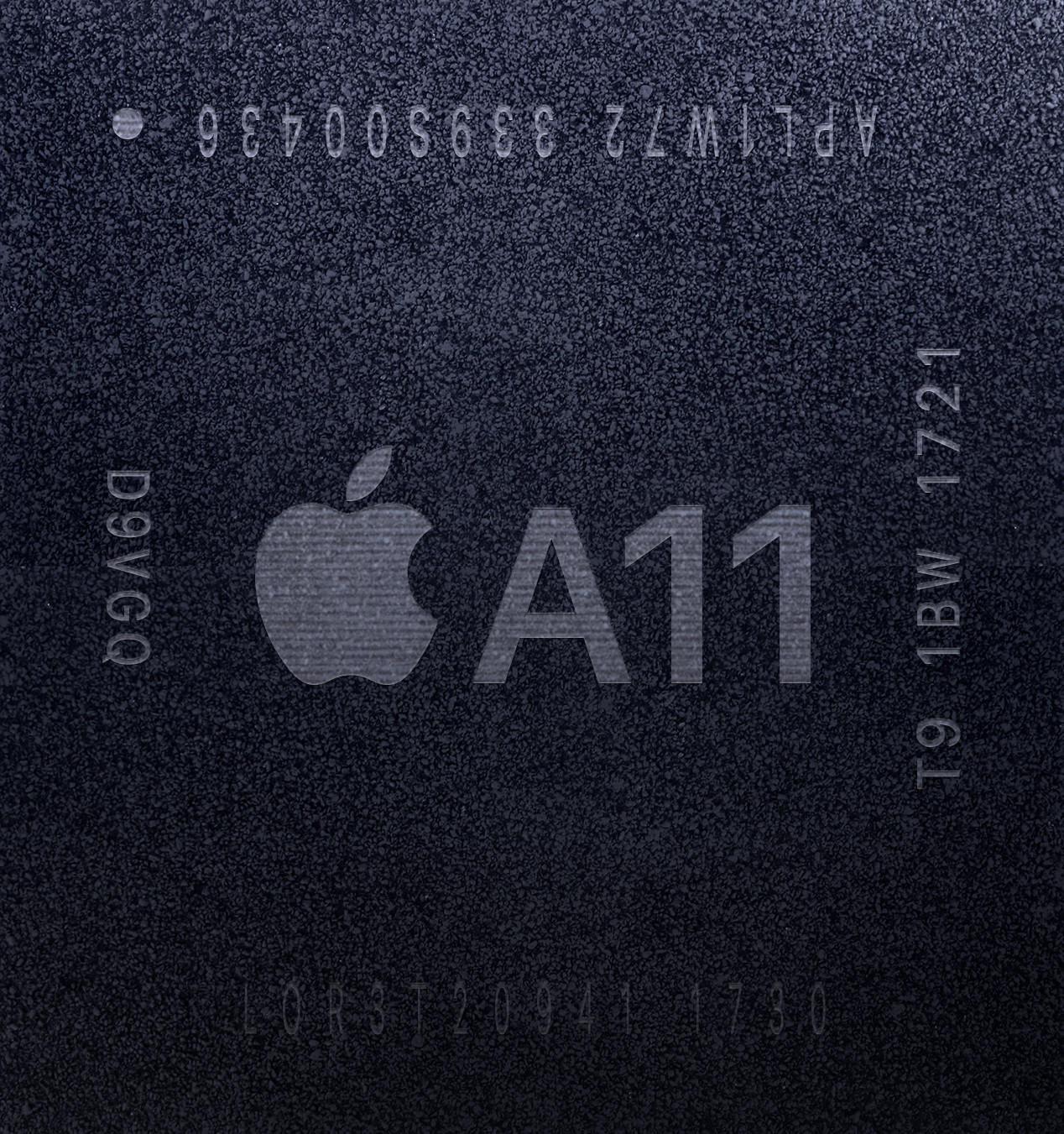
Clever hardware advancements can be used to be lighter on batteries – including low-power antennas, like Bluetooth 4.2, and low-power processors. I’d wager that the inclusion of low-power cores in the A10 and A11 on the iPhone 7 and 8/X families, respectively, was forward-thinking on Apple’s part to prolong the lifetime of these devices relative to the iPhone 6 family. It’s worth noting that Motorola did something similar ~4 years back with the Moto X, too. Designing dual low-power and high-power components that a device can intelligently switch between for specific usages is a good idea. Being a company that designs software, hardware, and the silicon is a huge advantage when trying to tackle this sort of problem.
Replacing built-in batteries in phones needs to be easier, cheaper, and less painful. Sending a phone somewhere for battery replacement and being phoneless for any amount of time is not acceptable for most people, and battery cases are inelegant. With this respect, Apple has an obvious advantage with their network of retail stores – other manufacturers need to innovate a great solution. Similarly, devices need to be transparent with users and communicate to them that there is a problem and replacing the battery is a good solution, e.g. “I’m slow and bad now because my battery is bad – please replace it.” The last sentence in Apples statement regarding adding the throttling feature is particularly worrying:
We’ve now extended [this] feature to iPhone 7 with iOS 11.2, and plan to add.
They need to be clear about what/when devices are added to this list, in addition to individual devices notifying users there is a problem. For instance, is this sort of throttling feature going to happen to Apple Watches or Airpods? iPad? Many users may prefer replacing a dead battery for $50-$100 over replacing the device entirely.
Lastly, and hear me out here, device makers could just make devices larger for larger batteries, especially with phones. This would negatively impact the weight of phones, but I’ve never heard anyone complain about the weight of their phone. Since the industry decided to remove replaceable batteries and toward built-in batteries, phone makers have done a terrible job ensuring phone batteries are large enough for the average 2 year replacement cycle. Part of the argument for building the battery into the phone was that removing the hinges and latches to secure the battery can be used to expand the battery. Over time though, it feels like that gain has been lost by phones becoming increasingly thin, and taxing those smaller batteries more with increasing pixels and computational needs.
Building larger phones is a tough sell, but I know just where to put the larger battery: get rid of the camera bump by making phones thicker and filling it with a battery. Hell, Apple has nearly already admitted this is a reasonable option by selling battery cases for their iPhone 6 family of phones – just make the phone thicker and be done with it. Case in point: iPhone X Its thin, light, beautiful, covered with pixels, but has an obnoxiously large camera bump. The obvious need for increased battery capacity seems like a good reason to kill the bump by making the body of the phone flush with that bump instead of pushing for thinner phones by measuring at the thinnest part of the phone.
or fuck it, let just have replaceable batteries with hinges and latches again.
—————————————————-
The post above this line was written on 12/23/17, I was delayed posting it due to the holiday. On 12/28/17, Apple announced that for 2018 they would reduce the cost of replacing phone batteries from $79 to $29 and include additional info for users in future releases of iOS following backlash of this scandal. This is a good response. I don’t think they’ll actually get rid of the camera bump until the camera can be as thin as the remainder of the phone, but we can all dream, can’t we?
Rainer Weiss, a professor at the Massachusetts Institute of Technology, and Kip Thorne and Barry Barish, both of the California Institute of Technology, were awarded the Nobel Prize in Physics on Tuesday for the discovery of ripples in space-time known as gravitational waves, which were predicted by Albert Einstein a century ago but had never been directly seen.
For those of you who are wondering what exactly gravitation waves are, they are analogous to the electromagnetic spectrum (light, radiation, etc.) except for time-space. I think it’s hard to overstate it how important this discovery is. We won’t know its repercussion for years, but this is going to lead to an entire branch of science and technology. Imagine living during the period when we were first learning about optics and how to manipulate light. How quickly these researchers got the prize following their discovery speaks to the weight (pun intended) all of this as well.

 At Ken