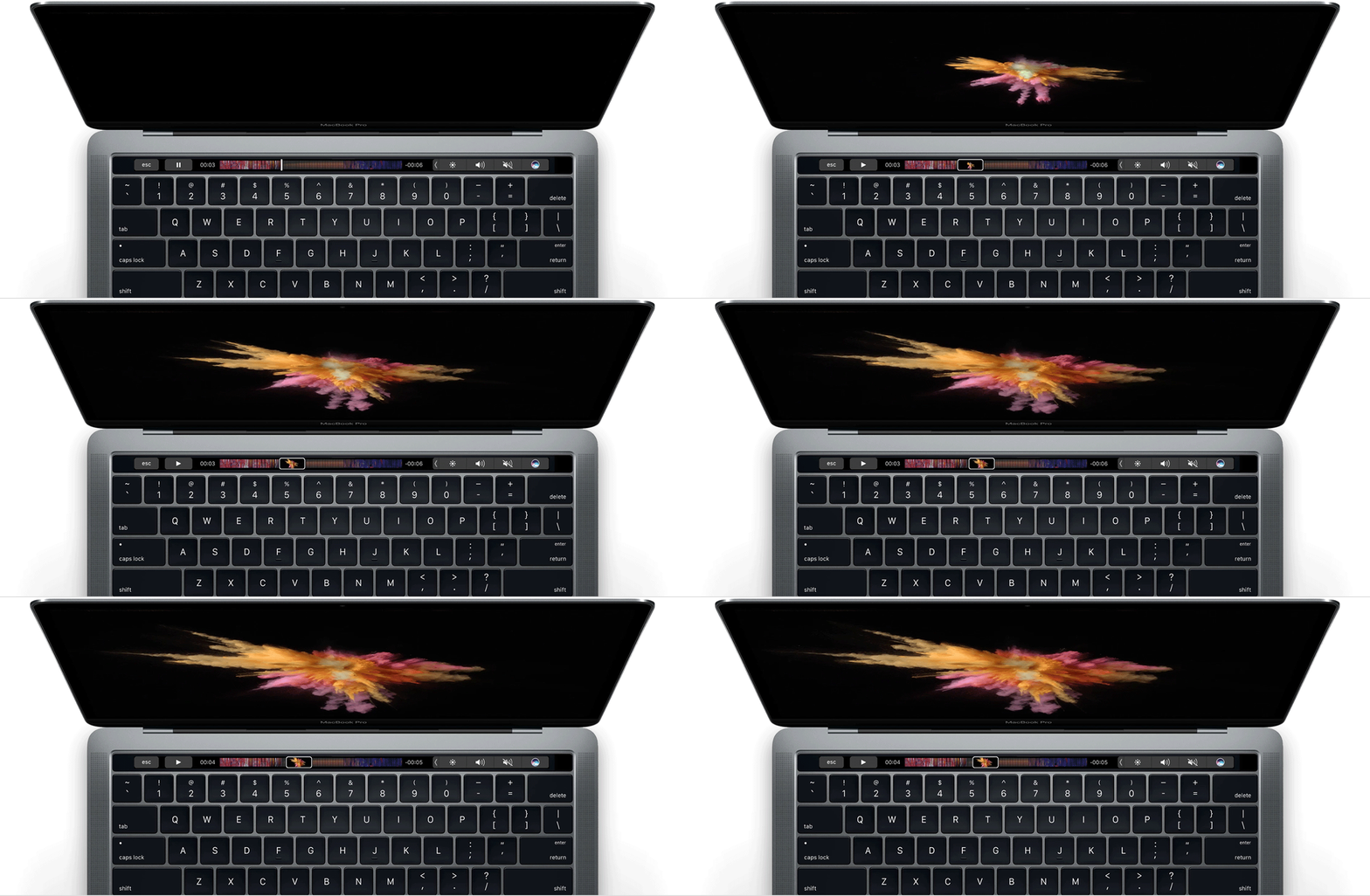
Now that the TouchBar MacBook Pro has been out for a year or so, it seems the consensus has been that power users aren’t wild about this model of MacBook Pro for several reasons: lack of ports, the luke-warm response to the Touch Bar, and the keyboard issues plaguing consumers.
Although, I don’t have an issue with the keyboard on the newest MacBook Pros, I do think the Touch Bar isn’t all Apple thought it was going to be. In truth, I bought the MacBook Pro with Touch Bar over the MacBook Escape due to the better processor – gaining the Touch Bar was just a fun addition. Although it is fun to use, it just isn’t a fast or easy thing to use because it just isn’t that useful. It doesn’t add anything to Mac that it absolutely couldn’t do before. This is why Mac power users just really haven’t embraced it. Alternatively, the Touch Bar really does increase the price on an already expensive computer, which means most casual Mac users will either get the MacBook or MacBook Escape.
I think its also worth stating that I think Apple made a good move not making a touch screen Mac. I never want, or need, to touch the screen on my work PC. I wish I didn’t have to touch my iPad when I’m using it with a keyboard. This image says it all:

Given the timid reception to the Touch Bar, I think its clear that Apple put this thing out because they felt they had to. They thought that since basically every PC now comes with a touch screen, and they knew they didn’t want a touch screen on the Mac, that they should “Think Different”. They shouldn’t have. They should have just made a great MacBook.
However, the Touch Bar did come one big upside – Touch ID. Touch ID on the Mac is great. However, it looks like Touch ID is being phased out on iPhones.
Leading up to the iPhone X announcement in September, rumors were swirling about whether or not Apple was doing away entirely with Touch ID, put it on the back of the phone, or somehow embed the technology under the screen of the phone. I, for one, thought there was no way they were getting rid of Touch ID. This was for three main reasons:
- Apple had built Apple Pay on Touch ID as its main way to authenticate payments. Banks and credit card companies are bought into this technology, and more and more companies are starting to support Apply Pay every month. Changing how that authenticates and getting everyone to agree to the change feels like a heavy lift.
- Services, like Apply Pay, have been increasing as a percentage of Apple’s revenue over the last several quarters.
- Apply just released the MacBook Pros with the Touch Bar. They had finally brought this technology to every major device category they sell – iPhones, iPads, and now the Mac. The line up was unified. I didn’t think they would mess with that.
Boy, was I wrong.
This has got me thinking about the future of Touch ID on all Apple devices. Now that the iPhone has migrated from Touch ID to Face ID, its not a huge jump to see the next iPad (or maybe the one after that) losing Touch ID and gaining Face ID. In fact, people are already making mock-ups
But what of the Mac? If the Touch Bar isn’t the big hit Apple thought it would be, and they’re migrating out Touch ID, is the Touch Bar going to be left behind when the Mac eventually moves to Face ID? After all, even Apple’s latest-and-greatest iMac Pro isn’t shipping with a Touch Bar. I think at a minimum, the Touch Bar will remain for however long apple uses this body type, but I wonder if the internal pressure to transition the Mac to Face ID combined with the keyboard problems plaguing consumers will push Apple to abandon this MacBook Pro style earlier rather than later.